
Introduction
Cotton candy and candy floss are sugary treats that people make by spinning heated sugar. A special machine turns the melted sugar into very fine threads. These threads create a soft and fluffy treat that quickly melts in your mouth.
Have you ever seen a small amount of sugar become a large, colorful cloud? The process looks almost magical. People often enjoy this sweet at fairs, carnivals, festivals, and parties because of its playful appearance and light texture.
This sweet treat has more to offer than its bright colors. Its history, preparation, flavors, and ingredients make it an interesting food to explore. In this article, we will look at these features and learn why people continue to enjoy it.
What Is Cotton Candy?
Cotton candy is a fluffy confection made mainly from sugar. A spinning machine heats the sugar and pushes it through tiny openings. The sugar forms delicate threads that gather around a cone or stick.
The finished treat feels very light and soft. It usually comes in colorful shades such as pink, blue, purple, or white. Flavoring can also give it flavors such as strawberry, vanilla, raspberry, or other sweet options.
People often associate cotton candy with fun occasions. Vendors sell it at fairs, carnivals, festivals, and parties. Even though it looks large, the fluffy shape comes from a relatively small amount of spun sugar.
Why Is It Called Candy Floss?
People use the name candy floss because the spun sugar looks like fine threads of floss. The machine stretches the heated sugar into delicate strands. These strands create the soft appearance that makes the treat look similar to cotton.
Different countries use different names for this sweet. People in the United States commonly say cotton candy, while people in the United Kingdom often use candy floss. Both terms refer to the same basic spun-sugar treat.
The name also reflects the texture of the dessert. Each strand feels light and airy. Once it reaches your mouth, the sugar dissolves quickly and leaves behind a sweet flavor.
History of Cotton Candy
Spun sugar has existed for a very long time. Before modern machines, confectioners created thin sugar strands by hand. They used simple techniques to stretch and shape heated sugar into delicate threads.
The machine-made version appeared around the turn of the twentieth century. William Morrison and John C. Wharton created a machine that spun sugar into fine strands. They presented their machine-made confection at the 1904 World’s Fair in St. Louis.
The new method made the treat easier to produce. As machines became more common, vendors started selling cotton candy at public events. Its unusual appearance and sweet taste helped it become a familiar fairground treat.
Cotton Candy and Candy Floss
Cotton candy and candy floss refer to the same type of spun-sugar confection. Both use heated sugar and a spinning process to create thin strands. These strands gather together to form the familiar fluffy shape.
The main difference comes from regional language. People in the United States and Canada generally use the term cotton candy. In the United Kingdom and several other places, people commonly use the term candy floss.
The preparation remains largely the same under either name. Manufacturers and vendors can add different flavors and colors to the sugar. People commonly serve the treat at fairs, carnivals, festivals, and celebrations.
How It Is Made
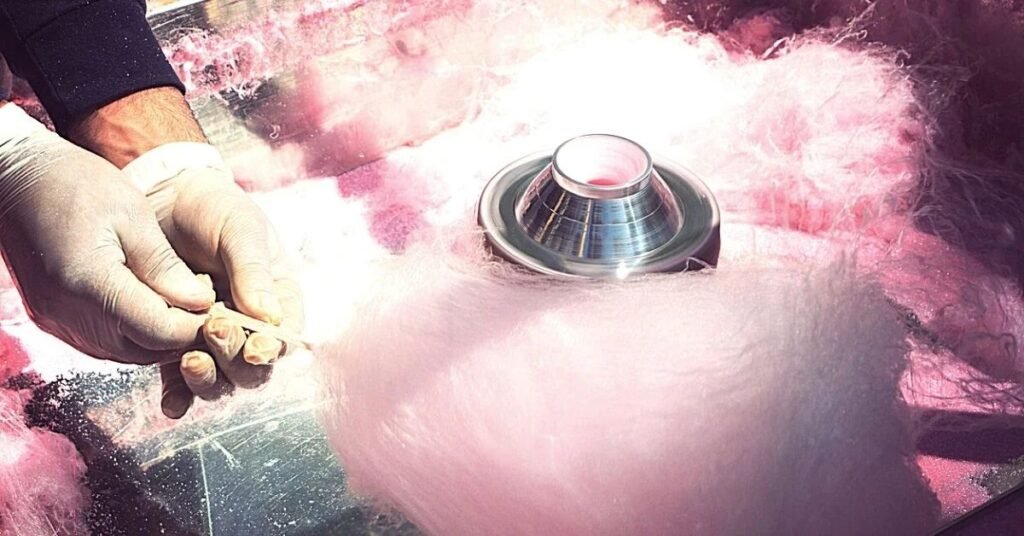
A cotton candy machine performs most of the work. First, the maker adds sugar to the machine’s spinning head. Heat then melts the sugar and prepares it for the spinning process.
The machine rotates the melted sugar rapidly. As it spins, the sugar passes through tiny openings and forms extremely thin strands. The strands cool as they move through the surrounding air.
The maker then collects the strands around a cone or stick. By moving the cone around the spinning head, the maker builds the fluffy shape. The finished cotton candy is ready to serve immediately.
Main Ingredients
Sugar forms the base of cotton candy. The machine melts the sugar and spins it into fine strands. This process gives the treat its familiar sweetness and airy appearance.
Many makers add food coloring to create attractive shades. Pink, blue, purple, yellow, and white are common choices. Some products may use natural coloring instead of artificial food dyes.
Flavoring can give the sugar a variety of tastes. Strawberry, vanilla, raspberry, cherry, and bubblegum are common examples. These simple additions allow makers to create different versions of the same sweet treat.
Taste and Texture
Cotton candy has a strong sweet taste because sugar provides its main flavor. Added flavoring can change the taste and create fruity or candy-like notes. Strawberry, vanilla, raspberry, and bubblegum remain familiar choices.
The texture makes cotton candy different from many other sweets. Fine sugar threads create a soft and airy structure. The strands dissolve almost immediately when they touch moisture in your mouth.
You can eat cotton candy without much chewing. It quickly disappears and leaves a sweet taste behind. This unusual eating experience adds to its appeal for both children and adults.
Is It Healthy?
Cotton candy does not offer many essential nutrients. Sugar makes up most of the treat, while protein, fiber, vitamins, and minerals remain very low. For that reason, people usually enjoy it as an occasional dessert.
Large amounts of added sugar can increase overall calorie intake. Frequent sugary foods can also contribute to tooth decay. Therefore, portion size and eating frequency can make a difference.
You can still enjoy cotton candy as part of a balanced eating pattern. Keep the serving moderate and choose nutritious foods for your regular meals. Drinking water and eating a variety of fruits and vegetables can also support healthy habits.
Homemade Cotton Candy
You can prepare cotton candy at home if you have a suitable cotton candy machine. Use granulated sugar as the base, and add food coloring or flavoring when desired. Always read the machine instructions before starting.
Add the prepared sugar to the machine and switch it on according to the manufacturer’s directions. The heat melts the sugar, while the spinning action turns it into thin threads. Slowly move a paper cone around the spinning head to collect the strands.
Making it at home gives you more control over flavors and colors. You can prepare fresh servings for parties, family gatherings, or other occasions. However, always keep your hands away from hot and moving parts during operation.
Nutrition Facts
Cotton candy mainly supplies carbohydrates from sugar. It provides very little protein, fiber, or other important nutrients. Nutrition values can change depending on the serving size and any added ingredients.
Traditional cotton candy contains little to no fat because the basic recipe does not require butter or oil. It also does not provide significant amounts of vitamins or minerals. Therefore, it works better as a treat than as a source of nutrition.
Serving size plays an important role when eating sugary foods. A small portion can fit into an overall balanced diet. However, regular large servings can increase your daily added sugar intake.
Popular Flavors
Cotton candy comes in many flavors that suit different preferences. Strawberry, blue raspberry, vanilla, and cherry are widely recognized choices. Each flavor can give the treat its own sweet taste and aroma.
Makers also create more playful options for special events. Watermelon, grape, lemon, and bubblegum can add more variety. Some vendors introduce limited-time flavors for holidays, festivals, or themed celebrations.
You can even combine flavors in one serving. Mixing two complementary options can create a different taste experience. This variety makes cotton candy easy to customize for different occasions.
Read more for info: https://swiftsavory.com/easy-snacks-for-kids-healthy-and-tasty-ideas-for-every-day/

Common Colors
Bright colors make cotton candy especially eye-catching. Pink, blue, purple, white, and yellow often appear in shops and at events. These shades can make the fluffy treat look even more appealing.
Makers can create different colors by mixing food coloring with the sugar. They may use one shade or combine several shades for a colorful effect. Some vendors create rainbow versions by layering multiple colors.
People sometimes associate certain colors with specific flavors. For example, pink may suggest strawberry, while blue may suggest blue raspberry. However, color alone cannot always identify the actual flavor, so the product label or vendor can provide better information.
Fun Facts
Cotton candy can look surprisingly large compared with the amount of sugar used to make it. The spinning process spreads the sugar into countless thin strands. These strands trap air and create the treat’s large, fluffy appearance.
The same sweet treat has different names in different regions. Americans commonly use the term cotton candy, while people in Britain often say candy floss. These names describe the same basic confection.
Cotton candy also creates an entertaining experience at public events. Vendors often spin the sugar in front of customers. Watching the small amount of sugar transform into a fluffy cloud can make the treat even more enjoyable.
Storage Tips
Moisture can quickly change the texture of cotton candy. Store it inside an airtight container or a tightly sealed food bag. A proper seal helps keep moisture away from the delicate sugar strands.
Keep the container in a cool and dry area. Avoid heat, humidity, and direct sunlight because these conditions can affect the treat’s texture. Refrigeration can also expose cotton candy to moisture and cause it to shrink.
For the best quality, eat cotton candy soon after you make or purchase it. If you need to keep it for later, seal the container well. Also, place it somewhere safe where other objects cannot press down on the fluffy treat.
Cotton Candy at Events
Cotton candy often appears at fairs, carnivals, festivals, and birthday celebrations. Vendors can prepare it while guests watch the spinning process. Its bright appearance can make food stalls and dessert areas more inviting.
Event organizers can offer several flavors and colors to give guests more choices. Some vendors also create special designs that match an event’s theme. This approach works well for parties, school celebrations, weddings, and seasonal events.
The preparation itself can entertain guests. Children and adults can watch the sugar turn into thin strands before receiving their serving. As a result, cotton candy can provide both a sweet snack and a small entertainment experience.

Tips for Enjoying Cotton Candy
Eat cotton candy soon after you buy or prepare it to enjoy its soft texture. Keep it away from moisture while you eat or store it. You can also explore different flavors and colors to make each serving more enjoyable.
| Tip | Why It Helps |
| Eat it fresh | Gives you the best soft and fluffy texture |
| Choose a small serving | Helps control your sugar intake |
| Explore new flavors | Makes the treat more interesting |
| Protect it from moisture | Keeps the sugar strands from becoming sticky |
| Handle it with clean hands | Supports better food hygiene |
| Keep it away from heat | Helps maintain its shape and texture |
| Drink water afterward | Helps refresh your mouth after the sweet taste |
| Seal leftovers properly | Reduces exposure to moisture |
| Serve it at special occasions | Adds a fun element to celebrations |
| Keep heavy objects away | Prevents the fluffy strands from getting crushed |
(FAQs)
1. What is cotton candy made of?
Cotton candy mainly consists of granulated sugar. Makers may also add food coloring and flavoring.
2. Is cotton candy and candy floss the same thing?
Yes. Cotton candy and candy floss describe the same spun-sugar treat, although different regions prefer different names.
3. What flavors does cotton candy come in?
Common choices include strawberry, blue raspberry, vanilla, cherry, watermelon, grape, and bubblegum.
4. How should cotton candy be stored?
Place it in a tightly sealed container and keep it in a cool, dry location. Protect it from moisture and heat.
5. Is cotton candy healthy?
Cotton candy contains mostly sugar and provides few nutrients. Enjoying a small amount occasionally fits better into a balanced diet.
conclusion
Cotton candy and candy floss have remained popular because they combine a sweet flavor with a unique texture. Their colorful appearance also makes them a fun choice for fairs, parties, and celebrations. The simple spinning process adds to the charm of this familiar treat.
Although cotton candy contains little nutritional value, you can enjoy it as an occasional sweet. Its long history, variety of flavors, and unusual texture make it an interesting dessert to explore. With proper storage and moderate portions, you can enjoy this fluffy treat while keeping your overall diet balanced.
Cotton Candy and Candy Floss: History, Taste, and Fun Facts